
Turn your love for art & psych into
a meaningful career
because your help will reach deeper roots in this world
You’ve witnessed the partnership between art and psychology—two powerful forces that unlock hidden messages. Now it’s time to go deeper.
Let me introduce myself
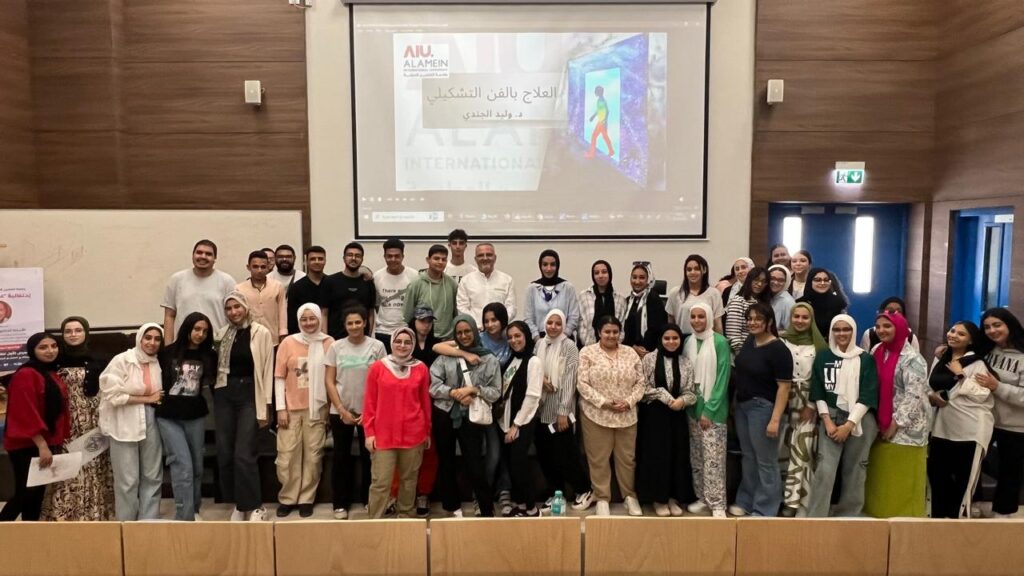
I’m Dr. Walid El-Gendy,
I hold a master’s and a doctorate in art therapy from Helwan University. I’m very happy to be here with you to take you on this journey. Anyone who would like to join me on this trip, I’d be delighted.
On our journey, we will ride a boat or a ship, whichever you prefer. We will sail to several islands. On each island, we will learn about a specific idea. After that, we’ll return to the starting point to see which island we need and go on our trip there.
So what are our islands?
We will also learn about many other things, including techniques we can use in our therapy sessions. I’m happy to be here with you, and I’d be delighted for you to be here with me.
One island will introduce us to art therapy, starting with the blank page we have. Then, another island is dedicated to children’s drawings, a third to adolescents’ drawings, and a fourth to adults’ drawings. On each of these islands, we will learn about the pros and cons and the disorders we might find in the drawings.
Introducing
Beyond the Lines
The Art of Psychological Analysis through Drawing
A step-by-step, 3 month program, accessible Art Therapy Training Program and workbook dubbed in english for english-speaking professionals, like you, who are in education, mental health and wellness fields.
Equip professionals with tools, knowledge, and mentorship to integrate art therapy into their practices while offering continued support and learning.
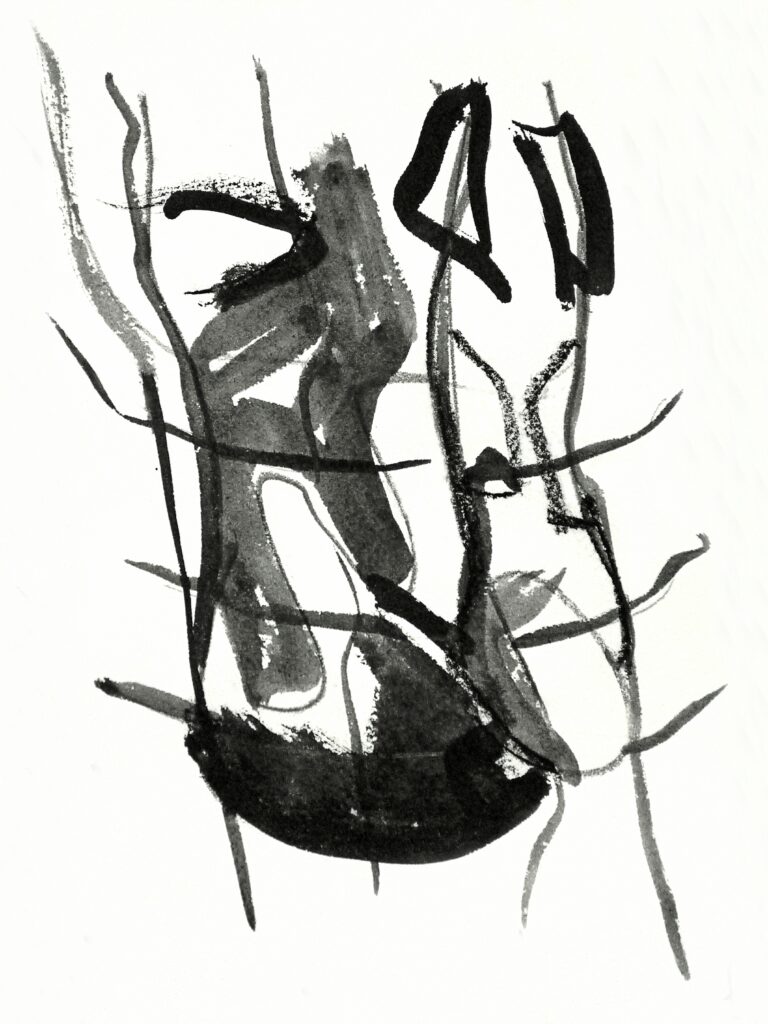
This goes beyond just a program
It’s a movement
Handy Tools to Integrate Right Away
Whether working with kids, teens, or adults. You got go-to tools to easily integrate into you therapy, counseling, education, or coaching right away.
Strengthen Emotional Intelligence
Continue practicing in depth strategies to gather deeper insights into emotions, trauma, development, and mental health without verbal communication.
Walk away with a High Value Skill
Stand out in your field with holding a skill in art interpretation as a therapeutic tool. Making you a indispensable and innovative.
Wondering what you’ll get inside
Beyond The Lines
The Art of Psychological Analysis through Drawing
1
Over 8 hours of
Recorded Lectures & Supervision Sessions
Your monthly studies to stimulate your curiosity. (40 Recorded Lectures | 10 minutes per lecture)
- General analysis concepts (10 Lectures in Paper-Based Presentation/Diagrams)
- Focus on disorders in each stage (10 Lectures in Screen Presentation (Slides/Video)
- Analysis of actual client drawings (10 Lectures Real-Life Case Studies)
- Direct address and discussion by Dr. Walid (10 Lectures Direct Discussion/Talk)
Your time to build your interpretational skills with professional analysis sessions. (4 Recorded Supervision Sessions | 4 hours)
- The program subscription also includes newly recorded lectures to analyze drawings submitted by participants.
- Each participant is entitled to the analysis of two drawings per program they subscribe to.
- If a participant registers for all three programs, they will receive an analysis of a total of six drawings (two drawings for each age-stage program).
Photo by Samantha Borges on Unsplash

2
Exclusive access to
Content & Resources
Participants will have on-demand access to all live and recorded sessions for 6 months after the program ends. All materials will be shared through a private Telegram channel exclusive to program members.
Photo by Lionel Magnacco on Unsplash
3
Your opportunity to get personal feedback
Artwork Submission & Review Session
Drawings are to be submitted via a private WhatsApp group created specifically for program participants. Participants can also submit client artwork (with consent) for professional review.
Photo by Kelly Sikkema on Unsplash


4
Exclusive fundamental
Handbook
Each participant will receive an exclusive PDF handbook that includes:
- Fundamentals of drawing interpretation.
- Practical frameworks and analysis methods.
- Real case studies and examples from the program.
Photo by Brett Jordan on Unsplash
Break down of the programs
1
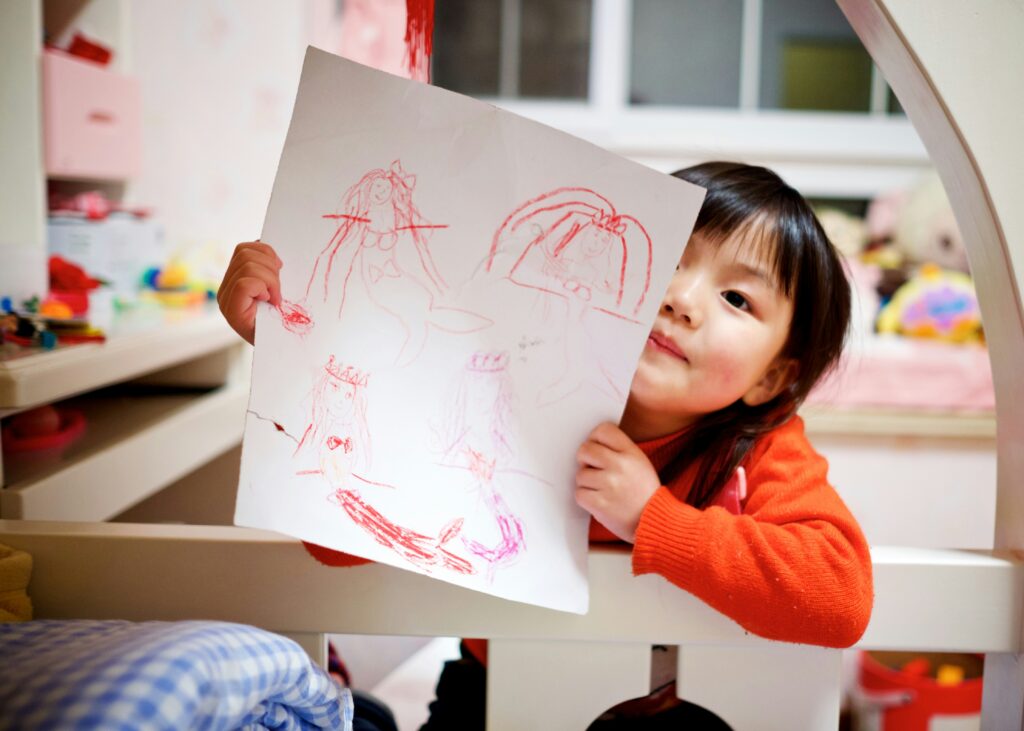
Early Childhood (Ages 1-7 years)
Decoding Children’s Drawing
Psychological and Artistic Interpretation of Children’s Drawings.
Total Sessions: 6
Duration: 4 hours
Session 1: Introduction to Analyzing Children’s Drawings
- The importance of drawing as a tool for psychological communication with children.
- How and why do children draw?
- Developmental stages of children’s drawings by age.
- The symbolism of shapes, colors, and positioning on the page.
Session 2: Psychological Meanings in Children’s Drawings
- Understanding psychological projection through drawings.
- Indicators related to people, family, and empty spaces in the artwork.
- Interpreting signs of aggression, anxiety, and fear in children’s drawings.
- Distinguishing between normal and concerning drawings.
Session 3: Practical Analysis Session (Part 1)
- Analysis of drawings submitted by clients of participants.
- Step-by-step interpretation: from observation to understanding.
- Providing guided feedback to participants.
- Open discussion on the different possible interpretations of the same drawing.
Session 4: Practical Analysis Session (Part 2)
- Focus on drawings related to family and the child’s environment.
- Analyzing use of space, colour choices, and element arrangement.
- Interpreting psychological and social context through drawing.
- Presenting brief examples of interpretive reports.
Session 5: Practical Analysis Session (Part 3)
- Analysis of drawings that reflect anxiety, trauma, or loss.
- How to identify emotional pain or challenges through art.
- Discussing the therapist’s responsibility in interpretation and intervention.
- Presenting anonymized real-life case examples.
Session 6: Practical Analysis Session (Part 4) + Final Guidelines
- Analyzing selected drawings from clients of participants reflecting various life situations.
- Comprehensive review of interpretation tools and techniques.
- Addressing frequently asked questions when working with children through art.
- Tips for applying drawing analysis ethically and professionally in practice
Photo by Jerry Wang on Unsplash
2
Middle Childhood (Ages 8-12)
The Art of the Middle Years: Child Drawing Analysis
Duration: 4 hours

3
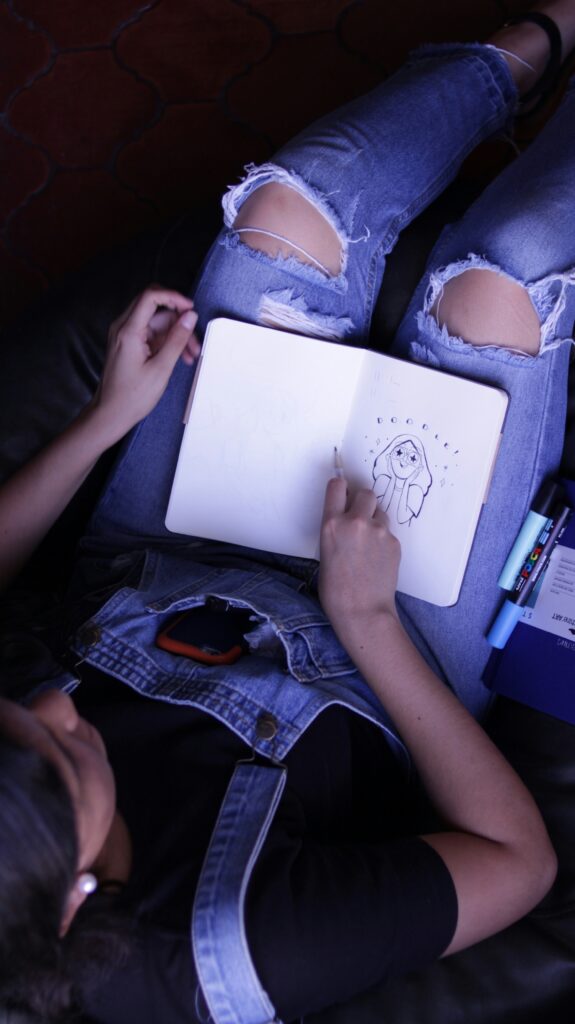
Adolescence (Ages 13-18 years)
Shades of Change – Understanding Teen Art
Duration: 4 hours
Session 1: Introduction to Analyzing Teen Drawings
- Characteristics of the adolescent stage and how they are reflected in artistic expression.
- The importance of drawing as a tool for emotional expression and release during adolescence.
- The development of drawings from childhood to teenage years – what changes?
- The role of symbols, colors, and details in expressing identity, rebellion, and belonging.
Session 2: Psychological and Behavioral Indicators in Teen Drawings
- How drawings reflect inner conflicts such as anxiety, depression, isolation, and anger.
- Common recurring symbols in teen art and their psychological meanings.
- Reading balance, composition, and lines as indicators of emotional stability or psychological tension.
- Distinguishing between normal artistic expression and patterns that require attention or intervention.
Session 3: Practical Analysis Session (Part 1)
- Analysis of drawings submitted by participants or their teenage clients.
- Step-by-step review of interpreting symbols and relationships within the drawing.
- Professional feedback and direct supervision by the instructor.
- Consideration of cultural and contextual differences in artwork.
Session 4: Practical Analysis Session (Part 2)
- Focus on drawings expressing identity, belonging, and social rejection.
- Interpretation of common teen-related themes: loneliness, love, academic pressure, and family dynamics.
- Real-life anonymized case examples.
- Hands-on practical exercise analyzing a drawing with guided steps.
Session 5: Practical Analysis Session (Part 3)
- Studying drawings that may indicate advanced psychological or behavioral issues.
- When should a referral to a mental health professional be made?
- How to maintain the balance between interpretation and emotional support.
- Ethical review of the boundaries of analysis and when to avoid assumptions.
Session 6: Practical Analysis Session (Part 4) + Final Guidelines
- Analysis of selected teen drawings based on various life contexts (school, family, personal situations).
- Review of key skills acquired during the program.
- Discussion of practical application in professional environments (schools, clinics, mental health centers).
- Professional tips for working with teens through art and future recommendations for practitioners
Photo by Andrey Novik on Unsplash
Over $300 in monthly learning for
Just 1/2 price for founding members on courses
Decoding Children’s Drawing
Learn to interpret children’s drawings to understand their emotions, development, and inner world. Gain practical tools to identify signs of trauma, anxiety, and family dynamics through art.
$50 CAD
The Art of the Middle Years: Child Drawing Analysis
Explore how tween drawings show the internal changes, the richness of their emotional world, and the begin stages of shaping their identity.
$50 CAD
Shades of Change – Understanding Teen Art
Explore how teen drawings reflect identity, emotional struggles, and social pressures. Understand key symbols and learn when artistic expression may signal deeper concerns.
$50 CAD
Full Program Package
A complete toolkit for analyzing drawings from childhood to adulthood. Gain age-specific insight to use art as a powerful tool for emotional understanding and professional support.
$100 CAD
See what others,
just like you, learned from me
I attended various lectures with Dr. Walid El-Gendy on art therapy and drawing analysis, which included an enjoyable practical aspect. I then enrolled in a diploma program in art therapy with a focus on clinical psychoanalysis for children and adolescents, where I underwent 80 hours of training over 4 months, combining both practical and theoretical application. I learned to use different environmental materials in therapy. I also collaborated with him on a joint research project analyzing drawings of students from the Sultanate of Oman, where his analysis revealed great accuracy in uncovering the students’ psychological state, disorders, and family relationships. Thank you, Dr. Walid, for this enriching experience, and God willing, we will continue with you on future educational journeys.

Department of Psychology, University of Al-Sharqiya, Sultanate of Oman
I was facing a problem with being overwhelmed by numerous sources that were neither sufficient nor qualified for learning art therapy. The feeling of frustration and constant searching for a trustworthy source with high-level expertise and information in art therapy was overwhelming. What made Dr. Walid stand out, aside from his professionalism and respect, was the trust and dedication he shows in his work and in explaining and conveying information. What is truly special in dealing with him is the atmosphere and family-like spirit among the team members. I feel distinguished and confident that I made the right choice. I feel like I’ve gained a new, qualified family, and now I am ready to become a qualified art therapist.

Visual Artist and Art Education Teacher
In my journey with psychotherapy, I was searching for a deeper way to understand emotions that words cannot describe. With Dr. Walid El-Gendy and his team, I discovered a unique approach that blends science and creativity. It wasn’t just about analyzing drawings; it extended to developing advanced therapeutic techniques in cognitive-behavioral and dialectical therapy using colors. The experience felt like opening a new window in art therapy, where colors became an effective analytical, diagnostic, and therapeutic tool. Today, as I continue my journey, I feel deeply grateful for this experience, which has given me greater clarity and stronger tools to understand the inner world of the human being

You love helping others
Let’s enhance it even more!
Let’s Clear Things Up
Still got Questions on your mind?
These maybe helpful
Who is this program for?
- Ideal for compassionate, creative professionals in mental health, education, or wellness fields who want to incorporate art therapy into their work. No prior art experience needed!
How is this program different from other art therapy courses?
- Unlike traditional therapy training, our program offers personalized mentorship, real-time artwork analysis, and practical tools to immediately apply in your practice.
How long is the program, and how much time will I need to dedicate?
- Each part is 1 month long, with 6 months of access to materials after the program ends, so you can learn at your own pace.
Do I need prior experience in art to join?
- No! This program is designed for professionals with no prior art experience. You’ll learn how to interpret art, not create it.
Will I receive a certificate upon completion?
- Yes! You’ll receive a certificate of completion, which adds professional value and credibility to your practice.
How do I register for the program?
- Click below to register now and start your journey toward integrating art therapy into your practice.
What is the price of the program?
- Prices for a single course is 50 dollars Canadian or for the full package 100 dollars Canadian. This is available for limited time to founding members.